D3.putty PDocsOpen Source
Related
10 Key Insights About OpenClaw and Long-Running AI Agents for Your OrganizationBalancing Transparency and Privacy: The Fight Over Public Access to ALPR Surveillance DataHow Hermes Agent and Qwen 3.6 Are Revolutionizing Local AI with NVIDIA HardwareAncient Dingo Burial Reveals Centuries of Indigenous Care in AustraliaGitHub Faces Critical Reliability Crisis as AI Coding Tools Trigger Exponential Traffic SurgeChainguard Forks Abandoned Open Source Projects to Plug Security GapsGitHub Deploys AI System to End Accessibility Feedback Black Hole: Every Report Now Tracked to ResolutionUsing GitHub Copilot to Automate Documentation Testing: A Step-by-Step Guide

8 Steps Meta Took to Escape the WebRTC Forking Trap and Modernize Real-Time Communication

Last updated: 2026-05-11 13:46:17 · Open Source

Introduction

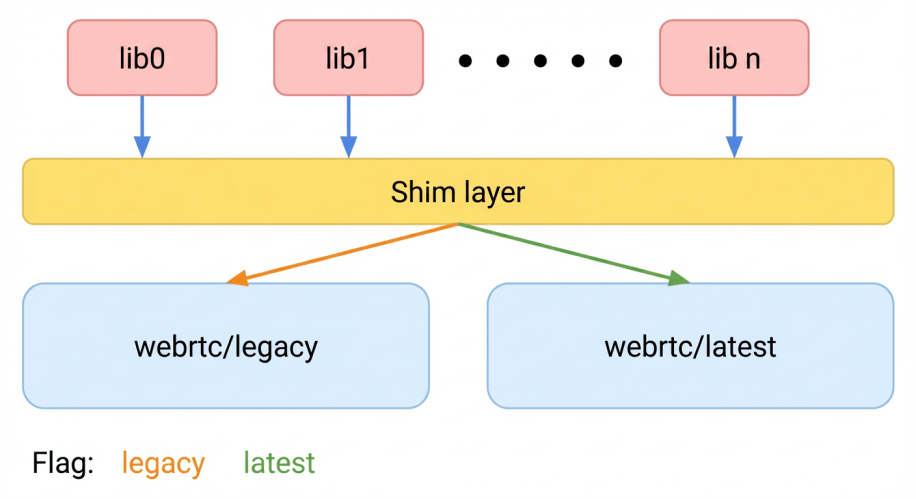
Meta relies on WebRTC to power real-time audio and video across platforms like Messenger, Instagram, Cloud Gaming, and VR casting on Quest. But maintaining a permanent fork of this massive open-source project created a classic 'forking trap': internal modifications drifted far from upstream updates, making integration costly and risky. To break free, Meta engineered a dual-stack architecture that allowed safe A/B testing across over 50 use cases, eventually moving to a modular system built atop the latest upstream version. This article walks through the eight critical steps Meta took to modernize WebRTC, improve performance and security, and establish a continuous upgrade pipeline.
8 Steps Meta Took to Escape the WebRTC Forking Trap and Modernize Real-Time Communication
Source: engineering.fb.com
8 Steps Meta Took to Escape the WebRTC Forking Trap and Modernize Real-Time Communication
Source: engineering.fb.com